




Professional Pocket Guides
NEW! Digital Negatives Book and Tools
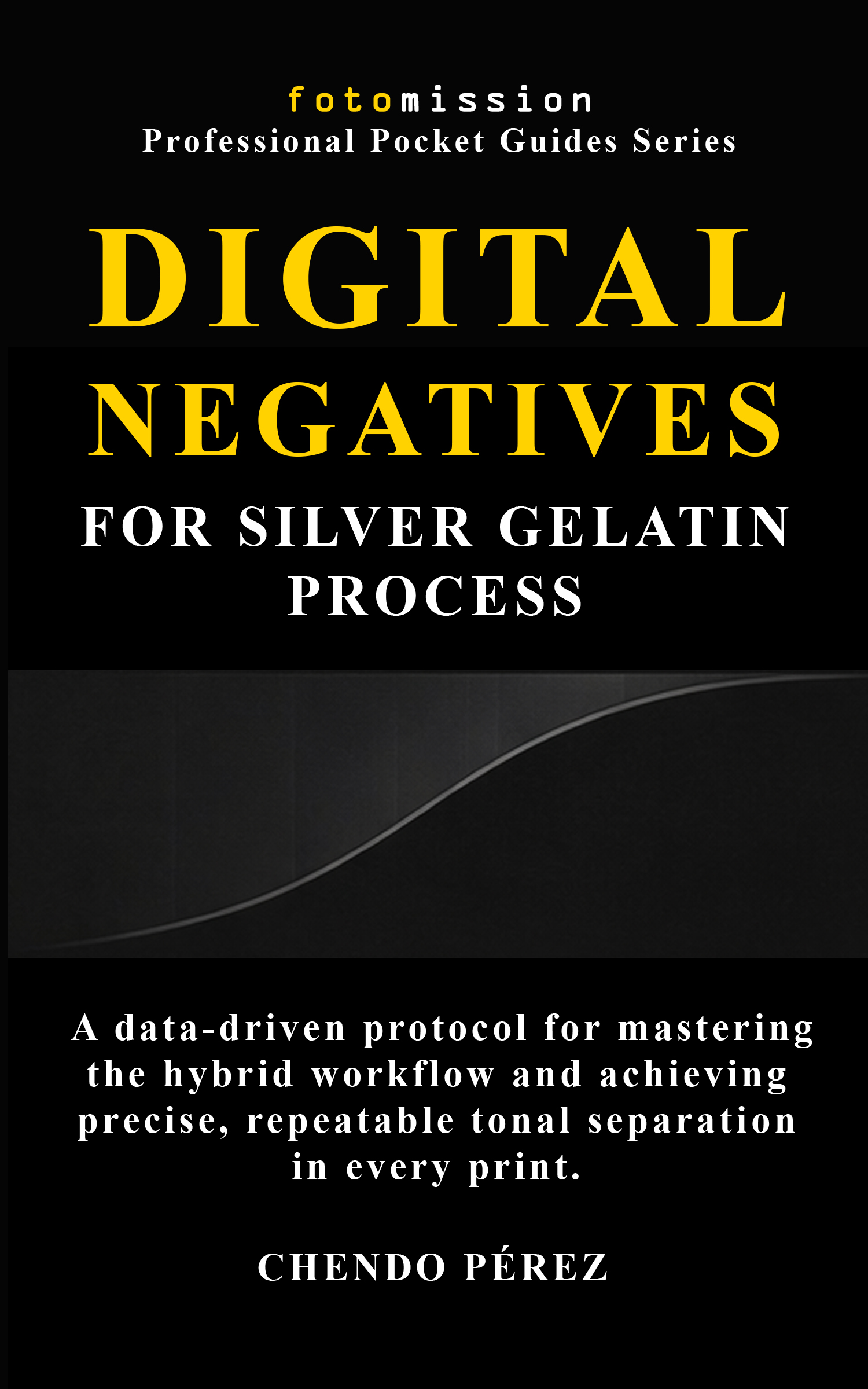
Digital Negatives for Silver Gelatin Process
The definitive technical protocol for the hybrid darkroom.
Producing a digital negative that translates into a controlled, predictable silver gelatin print is not a matter of approximation. It is a matter of calibration.
This book presents a complete, structured workflow for creating calibrated digital negatives using measurable results from the print itself. Instead of relying on visual judgment, presets, or trial and error, it establishes a controlled system in which tonal behavior is evaluated, measured, and corrected.
What This Book Provides
• A fixed digital-to-negative print pipeline
• A method for determining maximum usable exposure (Tmax)
• A system for measuring real tonal response from a physical print
• A process for constructing and applying a correction curve
• A repeatable workflow for producing consistent digital negatives
Core Tools
At the center of this method are two reference tools:
• A 21-step tablet for determining exposure limits
• A 100-step tonal palette for measuring tonal response and building the correction curve
Instructions for constructing both are included in the book.
For convenience, ready-to-use versions are also available on this page as downloadable files.
A Controlled System
Once calibrated, the workflow operates as a closed system.
All variables—materials, exposure, processing, and measurement—are fixed, allowing predictable translation from digital input to physical output.
Who This Is For
This book is intended for photographers who:
• Work in silver gelatin printing
• Use or want to use digital negatives
• Require precision, consistency, and repeatability
It assumes familiarity with both digital imaging and darkroom practice.
Final Note
This is not a general guide. It is a technical manual of a defined system.
When properly implemented, it removes uncertainty from the process and establishes a stable technical foundation—so attention can return to the image itself.
Buy on Amazon
$29.95
También disponible en Español.
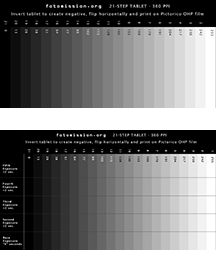
21-Step Tablets
Essential for Chapter 3: Calibration. Use these high-resolution digital references to identify your system’s “Merge Point” and calculate precise Tmax exposure times.
Note: These tools are provided as digital downloads. Upon completion of payment via PayPal, you will be redirected to the download page.
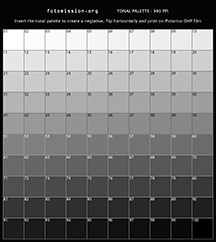
100-Step Tonal Palette
Designed for the Chapter 6 Tonal Calibration process. This 10x10 grid allows for granular measurement of your system’s tonal response to build accurate correction curves.
Note: These tools are provided as digital downloads. Upon completion of payment via PayPal, you will be redirected to the download page.
Other Titles in the Series
Pocket-sized, concise manuals for photographers who want clarity, precision, and a deeper understanding of the craft.
These guides focus on the essential principles behind great photography—how light behaves, how exposure really works, and how to think with intention behind the camera.
• Learn the foundational concepts that make lighting predictable and controllable.
• Understand how light quality, direction, and contrast ratios shape the final image.
• Gain a clearer grasp of exposure, tonal placement, and digital/film interpretation.
• Build a strong conceptual base that lets you design your own lighting or exposure solutions—not copy templates.
Each guide is precise: every page delivers distilled, field-tested knowledge you can apply in any setting.
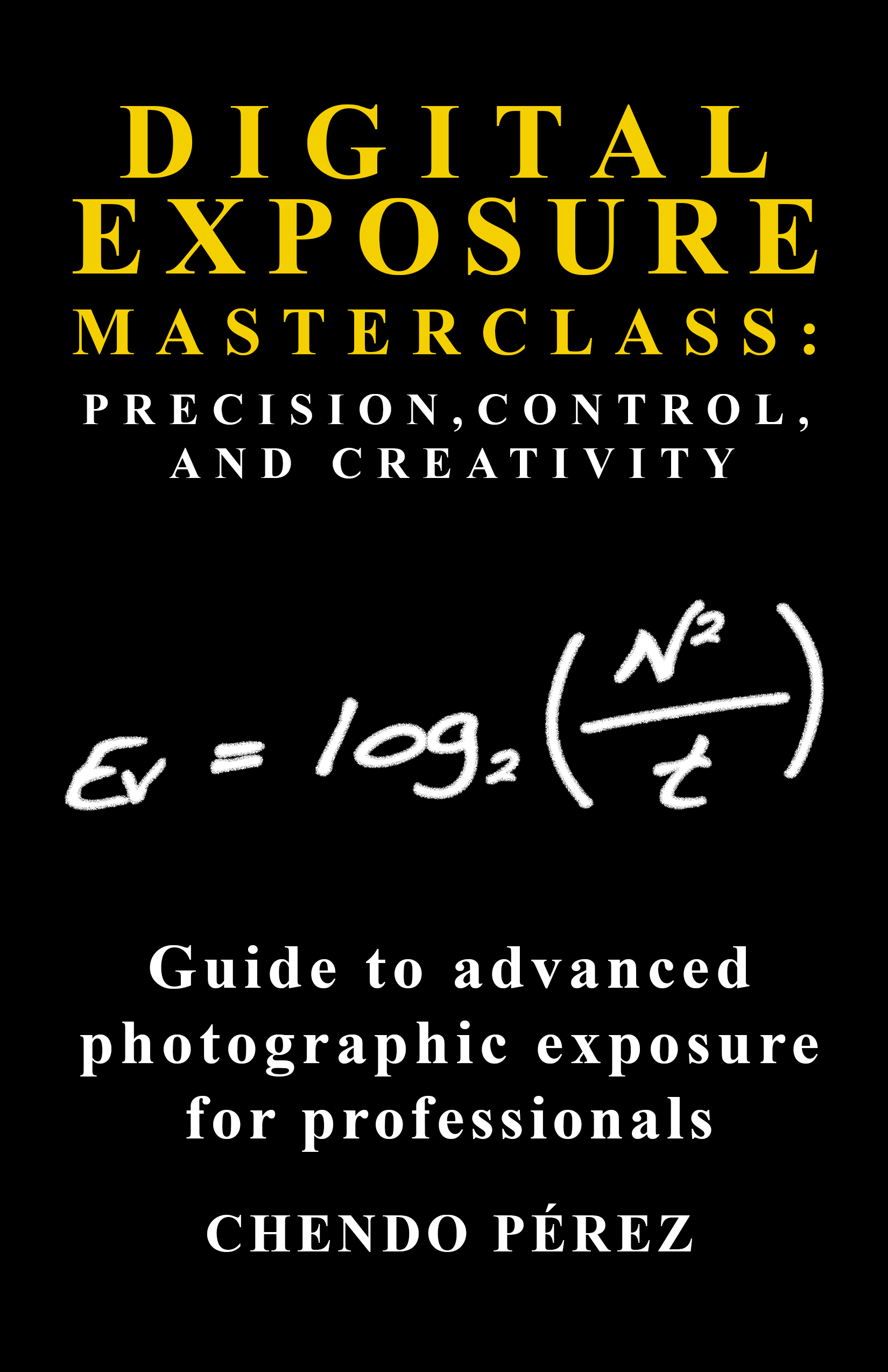
Digital Exposure Masterclass
Precision. Control. Creative freedom.
Most photographers learn exposure as a set of habits: trust the meter, glance at the LCD, fix it later. This works—until the light gets difficult, highlights clip, shadows collapse, or the mood you want demands a deliberate tonal decision.
Digital Exposure Masterclass is a concise pocket guide to advanced exposure for photographers who want consistency and control. It does not give you fixed formulas to memorize. It gives you the principles and tools to measure, judge, and decide with confidence— so you can respond precisely to any light you encounter.
You’ll learn how camera meters interpret luminance, how to override them intelligently, how to use the histogram as a diagnostic tool, and how to place important tones intentionally so the rest of the scene falls into a predictable tonal structure.
What you’ll learn
- The difference between measured exposure, correct exposure, and desired exposure—and when each matters.
- How light meters “see” tones, why they can be fooled, and how to compensate with repeatable accuracy.
- How to test your camera’s exposure bias and discover your camera’s usable textural range.
- How to use the histogram to protect highlights, preserve shadow detail, and handle extreme contrast.
- How to think in grayscale (because exposure is always luminance) and make tonal decisions with intent.
- Why there is no “perfect histogram”—only an exposure that serves your subject and your vision.
Clear, distilled, and free of fluff, Digital Exposure Masterclass is designed for fast reference in the field or studio. It strengthens your technical foundation so your creative choices become deliberate—not accidental.
Buy on Amazon
$19.95.
También disponible en español.
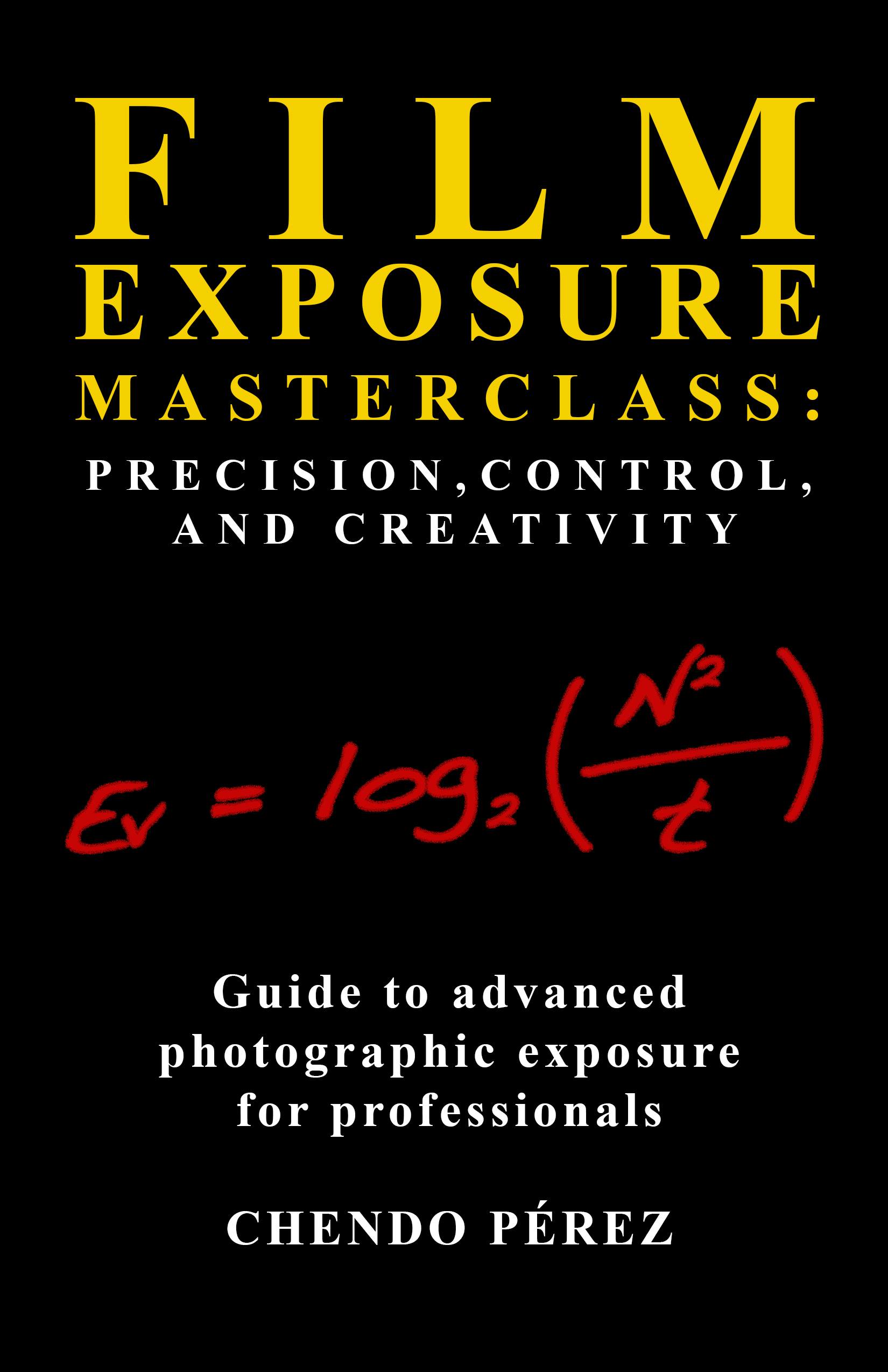
Film Exposure Masterclass
Precision. Control. Craft.
Many photographers learn film exposure as a set of habits: trust the meter, bracket “just in case,” and hope the negative holds. This works, until the light gets difficult, highlights block, shadows lose separation, or the print you want requires deliberate tonal placement.
Film Exposure Masterclass is a concise pocket guide to advanced exposure for photographers who want consistency and control on film. It does not give you fixed formulas to memorize. It gives you the principles and tools to measure, judge, and decide with confidence, so you can expose film precisely in any light and print (or scan) with intention.
You’ll learn how meters interpret luminance, how to override them intelligently, and how to think in tonal values, so you can place key tones, control negative density, and build a predictable tonal structure from scene to final image.
What you’ll learn
- The difference between measured exposure, correct exposure, and desired exposure, and when each matters.
- How light meters “see” tones, why they can be fooled, and how to compensate with repeatable accuracy.
- How to apply Zone System thinking for tonal placement without turning it into a rigid ritual.
- How to test your film + developer (or scan) workflow to understand usable shadow detail and highlight headroom.
- How to manage difficult contrast so the negative contains printable/scannable information where you need it.
- Why there is no “perfect exposure,” only an exposure that serves your subject and your intent.
Clear, distilled, and free of fluff, Film Exposure Masterclass is designed for fast reference in the field or studio. It strengthens your technical foundation so your creative choices become deliberate—not accidental.
Buy on Amazon
$19.95
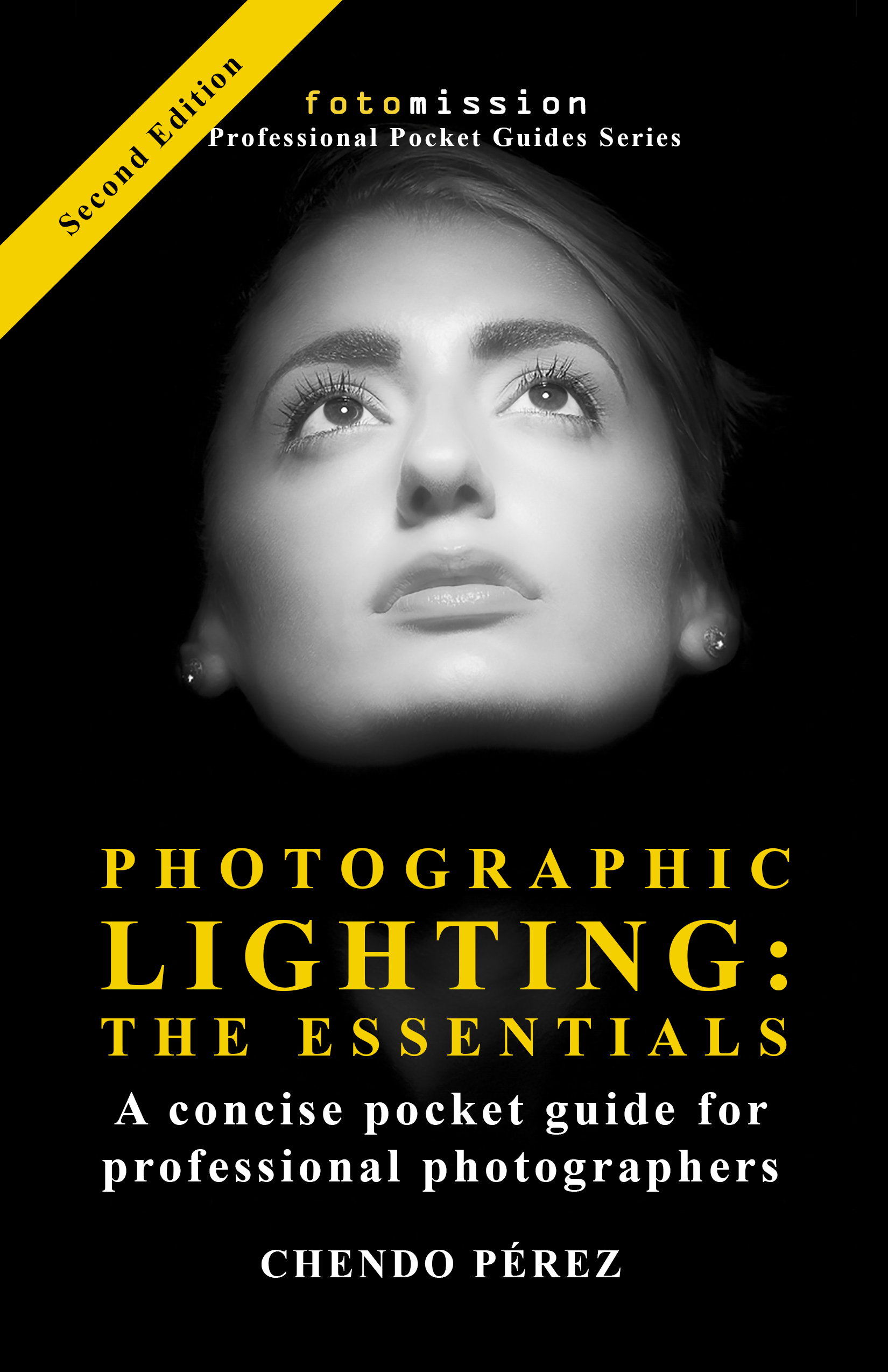
Photographic Lighting: The Essentials
Concise. Precise. Professional.
Great photography isn’t about memorizing lighting setups—it’s about understanding light itself.
Photographic Lighting: The Essentials is a no-nonsense pocket guide for photographers who want to strengthen their foundations and think about lighting with clarity and intention. In just 72 focused pages, it explains the core principles of photographic light without formulaic recipes or step-by-step diagrams.
Instead of telling you “where to put the lights,” this book shows you how light truly behaves—so you can design your own lighting solutions confidently in any environment, with any tools, using any modifier.
What you’ll learn
- How the fundamental characteristics of light shape the final image.
- How to control contrast, depth, separation, and texture with predictable results.
- How distance, angle, and surface type influence the quality of light.
- How to work creatively with lighting ratios instead of following them mechanically.
- How softboxes, reflectors, grids, and other modifiers really work—and why.
Clear, distilled, and free of fluff, Photographic Lighting: The Essentials is designed for quick reference in the studio or on location. It is short because it is precise: every page delivers insight that strengthens your technical foundation and elevates your craft.
Buy on Amazon
$19.95
También disponible en español.
Simultaneous Multi-Level Exposure Design for the Darkroom
Precision. Repeatability. Darkroom control.
Traditional dodging and burning can produce extraordinary prints—but complex hand movements and timed gestures can be difficult to reproduce precisely from one printing session to the next.
Simultaneous Multi-Level Exposure Design for the Darkroom presents a systematic method for controlling multiple local exposures through custom projection masks. By combining clear openings, opaque areas, and calibrated neutral-density materials, several levels of dodging or burning can be incorporated into a controlled, repeatable exposure workflow.
Rather than replacing the printer’s judgment, the method turns carefully developed exposure decisions into a physical and documented system—making it possible to return to an approved interpretation of a negative with far less dependence on memory or improvised hand movements.
What you’ll learn
-
How to construct and position custom projection masks above the enlarger easel.
-
How mask height, movement, and the enlarger’s light cone affect edge softness and registration.
-
How to use neutral-density materials to create several levels of local exposure within the same masking interval.
-
How to calibrate clear, ND, and opaque mask areas for your paper, chemistry, filtration, and enlarger.
-
How to design masks for precision dodging and burning from the projected image.
-
How to combine spatial control with timed masking intervals to fine-tune local exposure.
-
How to document mask position, exposure sequence, filtration, and processing variables for repeatable printing.
-
How to maintain closely matched prints across an edition, even when printing sessions are separated by days, months, or longer.
Designed for experienced black-and-white darkroom printers, this is not a basic guide to silver gelatin printing. It is a focused technical system for photographers who want greater precision and consistency in complex local exposure control.
The goal is simple: develop the print intuitively, preserve the exposure design precisely, and reproduce the approved interpretation with confidence.
Buy on Amazon
$19.95